
How to set up the architecture for industrial data collection (2)
Today, following yesterday’s content, we will share a dedicated data acquisition module that uses the physical signals of on-site objects. After the sensors convert the physical signals into electrical signals, the dedicated data acquisition module converts the electrical signals into readable digital quantities through an A/D analog-to-digital converter or digital circuit in the analog circuit. […]
How to set up the architecture for industrial data collection? (3)
Intelligent products and terminals emphasize remote wireless access and mobility. Through the operator 4G/5G Cellular network, Wi-Fi and other indoor short-distance communication, or low-power WAN wireless connection to report data. Various indicator data of intelligent products and terminals can be collected wirelessly, such as power, signal strength, power consumption, positioning, embedded sensor data, etc. 4G/5G Most […]
What are the key indicators of analogue signal acquisition in electrical signals?

Optical fiber transmission has low loss, is suitable for long-distance transmission, and is resistant to electromagnetic interference, but the cost is high. In real applications, it is mainly electrical signals, and optical signals will eventually be converted into electrical signals through photoelectric converters. What are the key indicators of analogue signal acquisition in electrical signals? […]
What are the methods of data transmission in industrial communication?
After the electrical signal becomes a readable digital quantity, there are many ways to transmit in the channel, such as parallel transmission and serial transmission, synchronous transmission and asynchronous transmission, Simplex transmission, half-duplex transmission and duplex transmission. 1. Parallel transmission refers to the simultaneous transmission of multi-bit binary data from the sender to the receiver at once. […]
What are the four common network topologies?
Common network topologies include star topology, bus topology, ring topology, tree topology, and other more complex topologies. Each topology has its own advantages and disadvantages, so when designing equipment to connect to the network, we need to choose the correct topology according to the actual situation of the project. (1) Star topology: refers to the connection […]
What is the “two layers and three levels” of the Industrial Internet of Things?
For the data generated by network equipment and business processes, it is required to be able to gather to the remote end in real time, realize data joint analysis, support the rapid decision-making of enterprises, and make decision-making well-founded. At present, the typical network in the factory presents a “two-layer and three-level” structure. “Two layers” […]
What is the network interconnection and data interoperability of the Industrial Internet of Things?
In the industrial Internet of Things system architecture, network connectivity provides support for promoting the full flow and seamless integration of industrial data. Network connection is divided into two levels: 1) network interconnection; 2) data interoperability. 1) Network interconnection refers to the realization of data transmission between entities through network connection, focusing on physical connectivity (physical layer) […]
In terms of Industrial 4.0 data interoperability, can horizontal and vertical interoperability be further realized?
This involves whether a complete set of interfaces, attributes and methods can be used between equipment and equipment, between equipment and control system, between equipment and IT management and operation system, between equipment and IT management and operation system, so that objects can self-identify and analyze each other without prior agreement, just like all just […]
What does industrial network equipment include? (-Part 1)
In the IT field, network equipment usually refers to hubs, switches, routers and so on. In a large network topology, there are multiple layers of network devices, such as switches divided into access layer, aggregation layer, and core layer. Considering network stability and reliability, core layer switches will be redundant not standby. Industrial network equipment […]
What does industrial network equipment include ? (-Part 2)
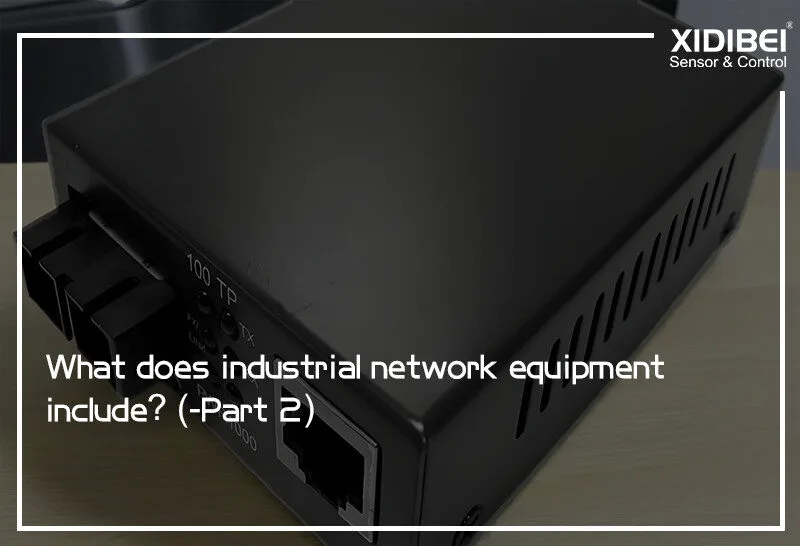
A repeater is the predecessor of a regular hub, which is actually a multi-port repeater. Hubs generally have Ethernet (RJ45) interfaces with different numbers of configurations such as 4, 8, 16, 24, 32, etc. Through these interfaces, hubs can achieve signal “relay” for the corresponding number of computers. Due to its intermediate position in the […]